Oral surgery can be done with local freezing alone, with sedation that relaxes you and dulls awareness, or under general anesthesia, where you are fully asleep. The right choice depends on how complex the procedure is, your health history and how anxious you feel. Your surgeon recommends a level at your consultation.
For many people, the procedure itself worries them less than the idea of being awake for it. Knowing how each comfort option works, and what it asks of you before and after, takes much of that worry away. Here is how our oral surgery and anesthesia team in Alliston approaches comfort for wisdom tooth removal, implants and other surgical care.
What Are Your Options for Comfort During Oral Surgery?
Every surgical patient receives local freezing at the treatment site, which blocks pain in that area. Some procedures need nothing more. For longer or more involved surgery, or for patients who feel very nervous, sedation or general anesthesia can be added on top of the freezing. Our oral surgery services include anxiety reducing sedation options, hospital level general anesthesia for complex procedures or patients who need deeper sedation, and anesthesia services designed specifically for children and younger patients.
The options sit on a spectrum, from fully awake but numb to fully asleep. The comparison below describes each level in general terms. Your surgeon will explain exactly which applies to your procedure.
| Option | How you feel | Commonly considered for | After the visit |
|---|---|---|---|
| Local freezing | Awake and aware, with no pain at the site; you may feel pressure | Simpler extractions and smaller procedures | You can usually drive yourself and return to normal activity |
| Sedation | Deeply relaxed and drowsy, with little memory of the procedure | Wisdom teeth, implants and patients with dental anxiety | An adult must take you home and supervise you for 24 hours |
| General anesthesia | Fully asleep and unaware | Complex procedures, including corrective jaw surgery | An adult must take you home and supervise you for 24 hours |
How Do You Decide Which Option Is Right for You?
Three things usually guide the recommendation. The first is the procedure: our wisdom tooth removal page explains that, based on the complexity, patients receive local freezing, sedation or general anesthesia, and corrective jaw surgery is performed under general anesthesia. The second is your health, including medications, breathing conditions and any past reactions to anesthesia. The third is you. If dental visits make you anxious, say so. That is useful information, not something to hide.
Your consultation is the time to ask questions. You will always see the doctor, and you can talk through what you would prefer, what the surgeon recommends and why. Some patients who expected to want sedation find that local freezing is enough for a simple procedure, and others are relieved to learn that a deeper option is available.
Who Provides Anesthesia at Our Office?
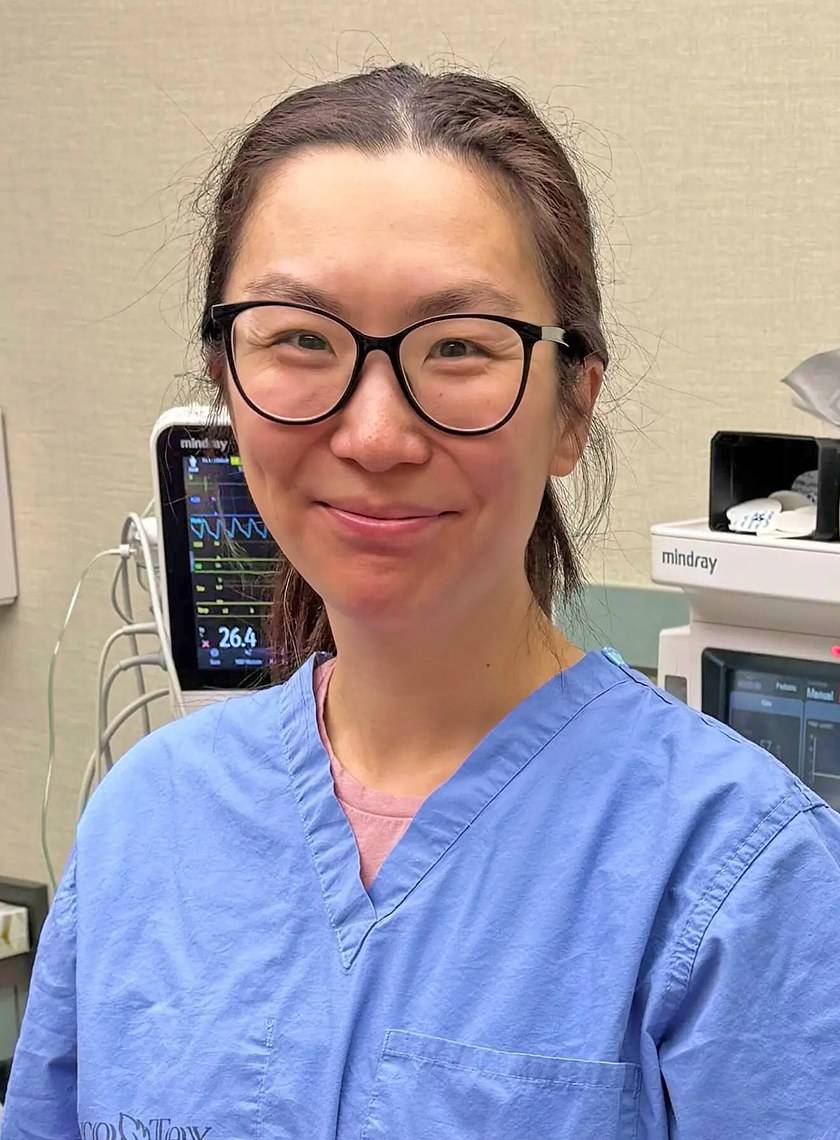
Our team includes a medical anesthesiologist, which is not something every oral surgery office can say. Dr. Cindy Wang earned her Doctor of Medicine (MDCM) at McGill University and completed her anesthesiology residency at the University of Toronto. She currently practices at Lakeridge Health Oshawa and has supervised and taught residents at the University of Toronto.
She works alongside our oral and maxillofacial surgeons, Dr. Peter Gioulos and Dr. Ross Linker, who is known for a reassuring, empathetic approach that helps anxious patients feel comfortable. Together, the team brings hospital grade safety to procedures performed in our Alliston office.
How Should You Prepare for Sedation or General Anesthesia?
Preparation matters as much as the anesthesia itself. Our instructions before sedation ask you not to eat or drink anything for at least eight hours before your appointment. Wear loose clothing with sleeves that roll up past the elbow, skip heavy makeup like nail polish and lipstick, and remove contact lenses, jewelry and dentures before treatment.
Tell the office ahead of time if you take routine medications, so we can give you instructions, and let us know if you become sick with a cold, flu, sore throat or stomach upset before your surgery date. Please do not smoke for at least 12 hours before surgery, and stop any recreational drugs 24 hours beforehand. Most important, arrange for a family member or friend to come with you and drive you home.
What Happens After You Wake Up?
Sedation and general anesthesia take time to wear off fully, even when you feel alert. After sedation, you must have adult supervision for 24 hours, and you should not drive a vehicle or operate machinery for 24 hours. Avoid alcohol for a minimum of 18 hours. Your companion should stay with you until you are alert and oriented.
Mild nausea can happen. If a carbonated drink does not settle it, our instructions suggest trying over the counter Gravol. From there, normal surgical recovery takes over: bite on gauze to control bleeding, use ice for the first day, begin with cool, clear liquids and work up to soft foods. If you notice hives or itching after taking prescribed medication, stop it and contact the on call surgeon.
What Should You Ask at Your Consultation?
A short list of questions makes the conversation easier, especially if you tend to forget things once you are in the chair. Ask which comfort option the surgeon recommends for your procedure and why, and whether a lighter or deeper option would also be reasonable. Ask how long the procedure is expected to take, how long you will stay in the office afterward, and when you can expect to feel like yourself again.
It also helps to ask practical questions. Which of your medications should you take or pause beforehand? When should your companion arrive, and how long should they plan to stay with you at home? What should you have ready in the kitchen for the first day? Bring your list, and bring your companion if they will be caring for you afterward, so you both hear the same instructions.
Can Children and Teens Be Sedated for Oral Surgery?
Yes. Many patients who need wisdom teeth out are teenagers, and our services include anesthesia designed specifically for children and younger patients. Our oral surgery page recommends having wisdom teeth assessed in the early teen years, which gives families time to plan the procedure and the comfort option together.
Teens follow the same preparation and supervision rules as adults, and a parent or guardian should plan to stay with them for the rest of the day. If your teen is also in braces with us, our surgeons and orthodontists coordinate under one roof so surgery fits into the treatment plan. Our wisdom tooth removal and dental implants pages explain how comfort is handled for each procedure.
Frequently Asked Questions
Will I feel anything during oral surgery with local freezing?
You should not feel pain once the area is frozen. Many patients feel pressure or movement, which is normal. If you would rather not be aware of the procedure, ask about sedation at your consultation.
Can I drive home after sedation?
No. After sedation you should not drive or operate machinery for 24 hours, and an adult needs to take you home and supervise you for the rest of that period.
Why can’t I eat before sedation?
An empty stomach lowers the risk of complications while you are sedated or asleep. Our instructions ask for nothing to eat or drink for at least eight hours beforehand.
Is sedation safe if I take daily medication?
Many people on routine medications are sedated safely, but the team needs to know about every medication in advance. Contact the office before your surgery date for instructions.
Talk to Our Team About Comfort Options
If worry about pain or anxiety has kept you from booking surgery, start with a conversation. Book an oral surgery consult at Alliston Orthodontics & Oral Surgery to meet your surgeon, review your imaging and choose a comfort option that fits your procedure and your health. Our oral surgery page has the full before and after instructions.