
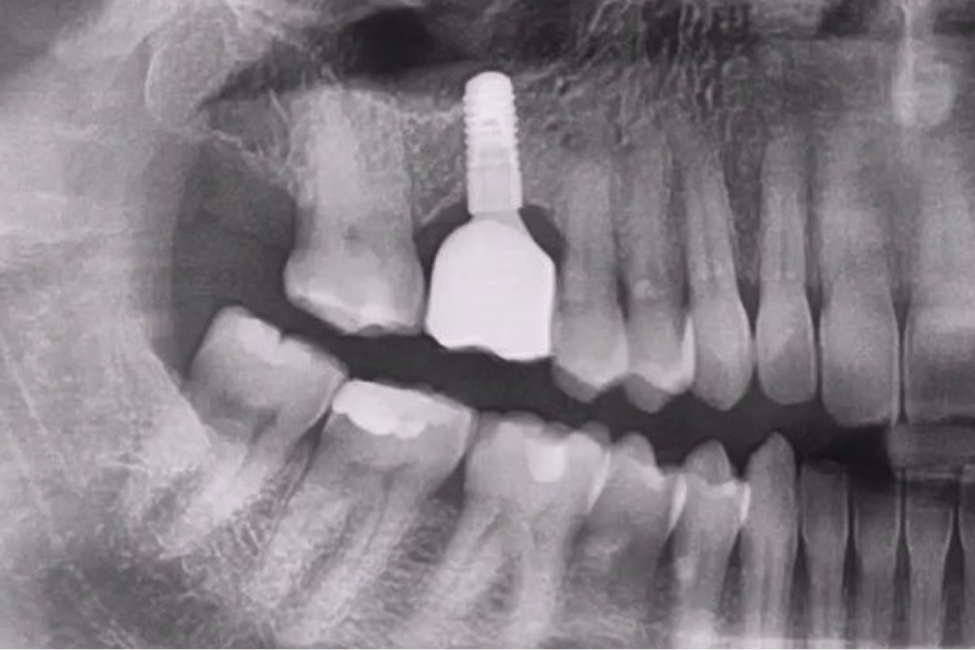
You may need a bone graft before a dental implant if your jawbone has become too thin or too short to hold the implant securely. Grafting rebuilds that missing bone so the implant has a solid foundation. Whether you need one depends on how long the tooth has been missing and what your 3D imaging shows.
Many patients are surprised to hear the word graft at an implant consultation. It can sound like a major add on, but for a lot of people it is a routine step that makes a long lasting result possible. Below, our oral surgery team in Alliston explains why bone is lost, how grafting works, and how it changes your implant timeline.
Why Do Some People Need a Bone Graft Before an Implant?
A dental implant is a small titanium post that replaces the root of a tooth. Once it is placed, the surrounding bone bonds to its surface through a process called osseointegration. That bond is what lets an implant handle chewing forces the way a natural root does, and it only forms when there is enough healthy bone around the entire post.
Bone in the jaw stays strong because the roots of your teeth stimulate it every time you bite. When a tooth is lost, that stimulation stops, and the ridge of bone that held the tooth gradually shrinks in both height and width. Gum disease, infection, an injury or a difficult extraction can speed up that loss. The longer a gap is left open, the more likely it is that some rebuilding is needed before an implant can go in.
The upper back jaw has an extra challenge. The sinuses sit just above the roots of the upper molars, and after those teeth are lost the sinus floor can drop into space that used to be bone. In that area, a procedure called a sinus lift adds bone beneath the sinus so an implant has enough height.
How Do We Know If You Have Enough Bone?
Bone volume is not something you can judge by looking in the mirror. At your consultation, our team reviews your full dental health history and takes 3D imaging or panoramic scans. These images show the height, width and density of the bone where the implant would go, along with nearby structures like nerves and sinuses.
From there, your surgeon can tell you whether an implant can be placed right away, whether a graft is needed first, or whether both can sometimes happen in the same visit. We also use guided surgical techniques to plan the exact position of each implant, which helps make the most of the bone you already have. You will leave the consultation knowing which path applies to you and why.
What Types of Bone Grafts Are Used for Implants?
Graft material acts as a scaffold. Your body gradually replaces it with your own new bone, which is what eventually supports the implant. Surgeons choose the type and source of graft based on how much bone is needed and where. The table below summarizes the most common approaches in general terms.
| Procedure | When it is used | What it involves |
|---|---|---|
| Socket preservation | Right after a tooth is removed, to limit bone shrinkage | Graft material is placed in the empty socket so the ridge keeps its shape while it heals |
| Ridge augmentation | When the jaw ridge has become too narrow or too short | Bone is built up along the ridge, often covered by a protective membrane |
| Sinus lift | When the upper back jaw lacks height below the sinus | The sinus membrane is gently raised and graft material is placed beneath it |
| Block or larger reconstruction | When there is significant bone loss from injury or long term tooth loss | A larger section of bone is rebuilt before implants are planned |
Graft material can come from your own body, from donor or animal sources that are processed for safety, or from synthetic materials. Your surgeon will explain which option fits your case and answer any questions you have about the material before you decide.
Does Bone Grafting Hurt, and What Is Recovery Like?
Grafting is performed with appropriate local freezing or sedation, so you should not feel pain during the procedure. Afterward, most patients describe soreness and some swelling similar to a tooth extraction. Our general post surgery instructions apply: the first 24 to 48 hours are usually the most uncomfortable, swelling is common for up to a week, ice helps during the first day, and soft foods are easiest while the area settles.
The healing you cannot feel takes longer. New bone needs time to grow into the graft before it can support an implant, so your surgeon will monitor the site and confirm it is ready before the next step. Following your aftercare closely, including avoiding smoking, gives the graft the strongest chance to integrate well.
How Does a Graft Change Your Implant Timeline?
Grafting usually adds time, because the bone needs to mature before the implant is placed. Our dental implant FAQ explains that timelines vary with individual conditions, including the need for bone grafting, and that many patients complete the full implant process in three to nine months. A small graft placed at the same visit as the implant may add little time, while a larger rebuild adds more.
Grafting can also affect cost, since preparatory work like bone grafts and sinus lifts is one of the factors in an implant estimate. Our team gives each patient a personalized estimate up front and discusses flexible payment plans, including interest free options. Some dental plans partially cover implant treatment, and our staff can help you understand what your coverage includes.
Who Performs Bone Grafting at Our Alliston Office?
Grafting is part of the full scope of oral and maxillofacial surgery. Dr. Peter Gioulos practices reconstruction and grafting along with implant placement, and has extensive experience with full arch implant solutions, including All on 4 treatment and specialized zygomatic and pterygoid implants. Dr. Ross Linker has a strong clinical interest in dental implants and bone grafting as well.
Because our surgeons collaborate closely with your general dentist or restorative partner, the graft, the implant and the final crown are planned as one treatment rather than separate pieces. Our dental implants page walks through each stage, and our earlier post on how implants restore function explains why replacing the root matters for long term bone health.
Frequently Asked Questions
Can I get a dental implant without a bone graft?
Often, yes. If your imaging shows enough healthy bone, the implant can be placed without grafting. Grafting is only recommended when the bone is too thin, too short or too close to the sinus to hold an implant securely.
Does every missing tooth lead to bone loss?
When a tooth is lost, the bone that supported it no longer gets stimulation from chewing and tends to shrink over time. The amount varies from person to person, which is why imaging matters more than how long ago the tooth was lost.
Can a graft be placed when a tooth is removed?
In many cases, yes. Socket preservation places graft material at the time of extraction to help the ridge keep its shape, which can make a future implant simpler.
Am I too old for a bone graft or implant?
Age alone is not a barrier. Our implant FAQ notes that overall health, bone condition, gum health and commitment to oral care matter more than age.
Find Out If You Are Ready for an Implant
If you are missing a tooth, or have been told you may not have enough bone for an implant, a consultation with imaging will answer the question clearly. Book an oral surgery consult at Alliston Orthodontics & Oral Surgery and you will see the surgeon in person, review your scans and leave with a plan and estimate that fit your goals.
