
Braces or aligners can fix many underbites, especially when the problem is mainly the position of the teeth. When the lower jaw itself has grown too far forward, or the upper jaw too little, orthodontics alone may not be enough, and corrective jaw surgery is combined with braces. Age and the cause of the underbite decide which path fits.
An underbite means the lower front teeth sit in front of the upper front teeth when you bite down. It can affect chewing, speech, jaw comfort and the way the face looks in profile. Because our Alliston office has orthodontists and oral surgeons under one roof, we see both sides of this question every week. Here is how the decision is usually made.
What Causes an Underbite?
Underbites fall into two broad groups. A dental underbite comes mainly from how the teeth are angled. The upper front teeth may tip backward, the lower front teeth may tip forward, or crowding may push teeth out of line. The jaws themselves are close to a normal relationship, so moving the teeth can correct the bite.
A skeletal underbite comes from the jaws. The lower jaw may be longer or set further forward than the upper jaw, or the upper jaw may be underdeveloped. Family history plays a large role in jaw growth, and childhood habits that affect jaw development can contribute as well. Many people have some of both. Sorting out how much of the underbite is dental and how much is skeletal is the first job of an orthodontic exam.
How Do Orthodontists Tell a Dental Underbite From a Skeletal One?
A visual exam is only the starting point. Our orthodontists also look at how the jaws close, whether the lower jaw slides forward to let the front teeth meet, and how the profile looks from the side. Some children who seem to have an underbite are actually shifting their jaw forward to avoid a tooth that is in the way, which is a very different problem to treat.
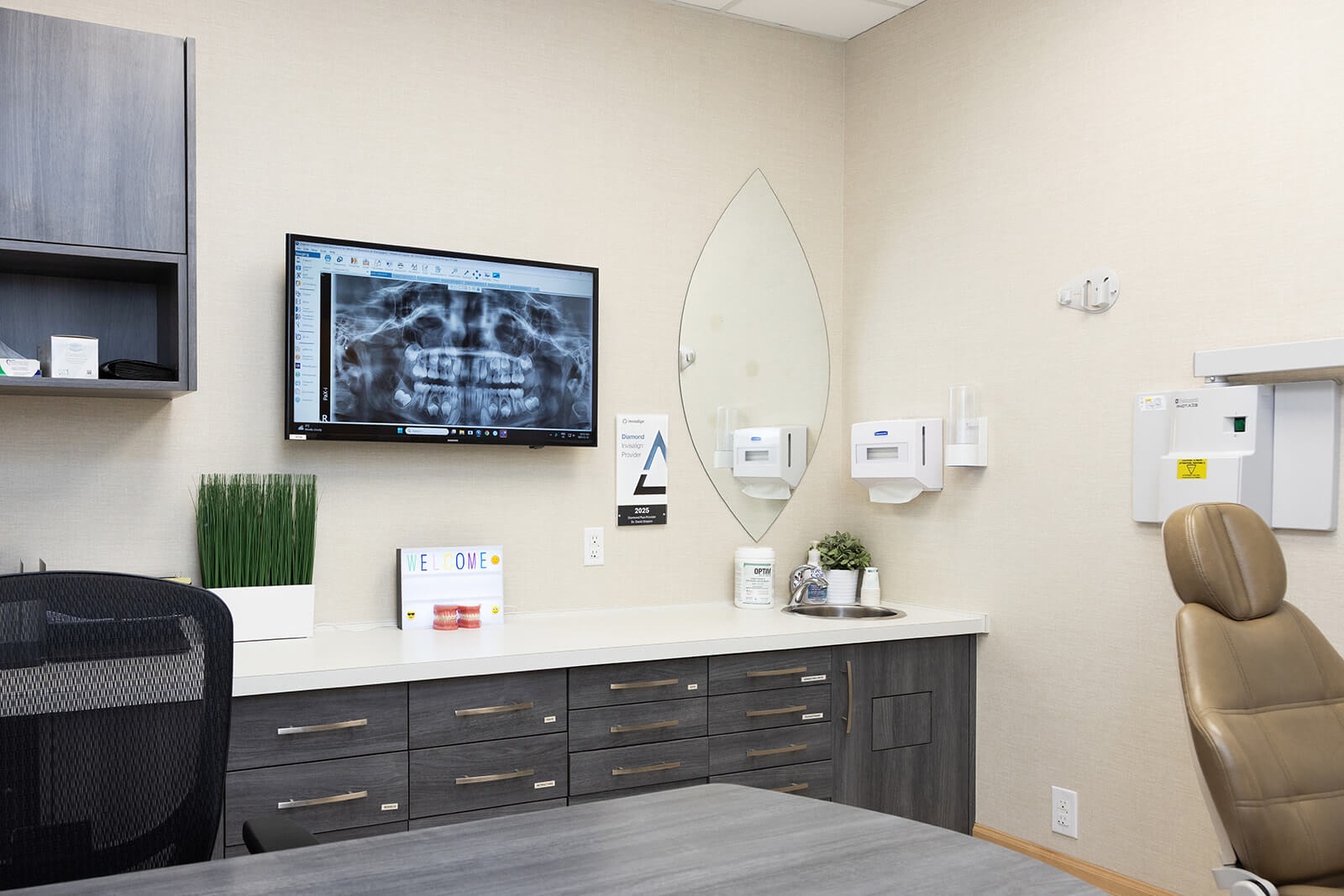
Imaging fills in the rest. Our digital panoramic and cephalometric imaging shows the teeth, bone structure, airway and jaw alignment in a single scan, and it is the same imaging our team relies on for surgical planning and for monitoring growth in younger patients. An iTero digital scan adds a detailed 3D model of the teeth and bite. Together, these records show how much of the underbite comes from the teeth and how much comes from the jaws.
Can Braces Fix an Underbite on Their Own?
For mild to moderate dental underbites, yes. Braces or clear aligners can tip and move the teeth into a healthy bite, often with elastics that apply gentle pressure between the upper and lower arches. Our orthodontists offer Mini Master and Iconix braces as well as Invisalign and Angel Aligners, and the choice of appliance depends on the movement needed and your preferences.
When the jaw difference is larger, orthodontics can sometimes disguise it by angling the teeth to meet. This approach, often called camouflage, may produce an acceptable bite, but it has limits. If the jaw imbalance is significant, tipping the teeth far enough to compensate can leave the bite less stable or the profile unchanged. That is when your orthodontist will raise corrective jaw surgery as an option.
When Is Corrective Jaw Surgery Recommended?
Orthognathic surgery, also called corrective jaw surgery, realigns the upper and lower jaws when bite problems go beyond what braces alone can address. Our corrective jaw surgery page lists the signs our team looks for, including difficulty chewing, biting, speaking or swallowing, a noticeable facial asymmetry, a severe underbite, chronic jaw or TMJ pain, frequent headaches or breathing issues, and previous orthodontic treatment that did not fully correct the jaw alignment.
Surgery is planned once jaw growth is complete, which is typically in the late teens or adulthood. Operating before growth finishes risks the jaw continuing to grow and the underbite returning. The comparison below shows how the two approaches differ.
| Question | Orthodontics alone | Orthodontics with jaw surgery |
|---|---|---|
| Most suited to | Dental underbites and mild jaw differences | Skeletal underbites where the jaws are significantly out of balance |
| What changes | The position and angle of the teeth | The position of the jaws, then the fine detail of the bite |
| Typical age | Children, teens and adults | Late teens and adults, once jaw growth is complete |
| Effect on profile | Little change to facial balance | Can improve facial balance as well as the bite |
| Recovery | No surgical recovery | Soft food diet and swelling; most people return to normal activities in three to four weeks |
Can Early Treatment Prevent Surgery Later?
Sometimes. While a child is still growing, there is an opportunity to guide jaw development rather than correct it after the fact. Our two phase treatment approach uses an early phase, typically between ages 6 and 10, to guide jaw growth and create space for permanent teeth, using appliances such as expanders when they are needed. That early phase can reduce the need for extractions or surgery later on.
Not every underbite can be fully corrected this way, especially when strong family growth patterns are involved, but early evaluation gives you the most options. Dr. Shapiro is known for a family centered approach and a passion for guiding healthy jaw development. If you notice your child’s lower teeth sitting in front of the upper teeth, an orthodontic exam is the right first step.
What Does Treatment Look Like When Surgery Is Involved?
Surgical correction is a team effort that happens in three phases. First, braces or aligners position the teeth for the new jaw relationship. This pre surgical phase can temporarily make the bite look worse, because the teeth are being lined up for where the jaws will be rather than where they are now.
Next, our oral surgery specialists perform the surgery under general anesthesia, repositioning one or both jaws using precise bone cuts, plates and screws. Finally, post surgical orthodontics fine tunes the bite and keeps the result stable. Recovery involves swelling and a soft food diet, and most patients return to normal activities in three to four weeks, while full healing of bone and soft tissue can take several months.
Cost depends on whether one or both jaws are involved, how much repositioning is needed, the orthodontic work before and after, and hospital and anesthesia fees. When surgery is medically necessary, for example for airway, chewing or speech problems, many plans cover part of it, and our team helps you navigate insurance and financing.
Frequently Asked Questions
Can Invisalign fix an underbite?
Clear aligners can correct many mild to moderate dental underbites. Skeletal underbites where the jaws are significantly out of balance usually need braces or aligners combined with corrective jaw surgery.
At what age can someone have jaw surgery for an underbite?
Usually once jaw growth is complete, which is typically in the late teens or adulthood. Your orthodontist and surgeon will confirm timing for each patient.
Is jaw surgery only for cosmetic reasons?
No. Improved facial balance is often a result, but the primary goals are functional: biting correctly, chewing comfortably, breathing better and protecting long term oral health.
Do I need braces if I have jaw surgery?
Yes. Most patients need orthodontic treatment before and after surgery so the teeth fit together properly in the repositioned jaws.
Get a Clear Answer About Your Underbite
The only way to know whether braces alone will work is a careful exam of the teeth and jaws. Book a free orthodontic consult at Alliston Orthodontics & Oral Surgery. Our orthodontists will explain what is causing the underbite and, if surgery is worth discussing, bring our surgeons into the plan from the start. Our earlier post on bite problems in children and adults covers other bite issues we treat.